Insects Matter
Originally published on my Substack: Insects Matter
Not more than people
Animal welfare is an issue which cuts across traditional political divisions: it has advocates and opponents on the far right, far left and everywhere in between. Generally, animal welfare is associated with the left, but that link is weak and inconsistent. The book Communist Pigs, for example, tells the story of how in the German Democratic Republic, factory farming was thought of as in concordance rather than in conflict with socialist principles. On the other hand, India’s far-right Bharatiya Janata Party has been promoting Dietary Vegetarianism as part of their broader project of Hindu nationalism.
In any case, this allows people to leverage their existing political commitments to support or oppose animal welfare on ideological grounds. For those already unconcerned with animals and looking for a way to rationalize their position, they can attribute it to their ideological enemies. For the right, animal welfare is an anti-human concern of woke over-educated liberals. For the left, animal welfare is the pet project of cynical billionaires distracting from more salient human issues.
All of these critiques were in full force this week against Substack’s Bentham’s Bulldog (Matthew Adelstein). Adelstein has long argued for the importance of animal welfare issues, and is willing to extend that concern to small animals, in this case, insects. However, he takes his advocacy even further, arguing that, given the extremely large numbers of insects, in aggregate, they actually matter more than people. Many immediately balked at this, unwilling to consider his conclusion, which was so absurd that almost no one defended it.
Adelstein lamented that most people reacted by sneering rather than considering his argument.1 The discussion was further confused because his post conflates two things: that insects matter, and that they matter more than people. I agree with him on the former, and disagree on the latter. Many of his opponents, buying into his framing that there is some exchange rate between human and insect lives, were forced to either say that either insects don’t matter at all, or agree that they matter more than people.
I believe, simply, that insects matter, and that people matter, but that there is no meaningful exchange rate between them. What is the exchange rate, for example, between lying and killing? Obviously we would accept such a thing is absurd: they are, like many ethical concepts, incomparable and certainly unquantifiable. It is equally absurd to try to measure and quantify the “goodness” contained in a single human life vs. a single insect life, much less try to measure all humans and insects against one another. Adelstein writes as if accepting that insects matter even a little bit leads to his conclusion, but that simply does not follow.
Adelstein’s argument sets up a “trolley problem”-style analysis where we weigh and compare goods on a moral scale. Much can be made of this endeavor: does he under-weight humans? Does he over-weight insects? How do different forms of suffering compare, does intensity matter more than duration? How many insects can dance on a head of a pin? I question whether these sorts of “moral tradeoff” questions are particularly necessary. Take, for example, the matter of factory farming. Adelstein believes that factory farming is really, really bad. He has even written before (in a much less viral post) against insect farms in terms that I actually completely agree with. I laud his, and anyone’s commitment to reduce or eliminate their consumption of animal products (especially meat). However, notably, this does not require any tradeoff against human well-being: Vegetarianism is, depending on what research you trust, probably or definitely good for you, not to mention all the labor and climate issues surrounding animal agriculture. When considering factory farming, there is no trolley problem here: vegetarianism (or veganism) is a win-win for both human and animal life!
Even within the highly quantitative world of effective altruism, which requires some sort of measure of effectiveness, we are not necessarily required to pit different kinds of human and animal life against one other. A charity aggregator like FarmKind does not merely allocate all of its resources to its “most effective” charity (Shrimp Welfare Project) at the expense of all others, but promotes a diversity of “highly effective” animal welfare organizations. Advocates for the 10% pledge claim that, for someone moderately high-income and not financially constrained, giving merely 10% of their income to effective charities can do an enormous amount of good (even saving many human and animal lives) at almost no cost to their own well-being.
Outside of lay philosophy debates and the torture victims of Saw, most moral questions (especially in the animal realm) do not require us to quantify and weigh lives against each other in order to act well. Adelstein provides no examples in either his insect article or its follow-up where we would actually need to compare human and insect life in the quantitative aggregate to make some ethical decision.
Rather, what we need is not more precise calculations in order to improve the lives of animals, but a cultivation of pro-animal personal virtue, of viewing animals as, in some way, like ourselves, and treating them accordingly. This is a kind of virtue that, and I imagine Adelstein would agree, is severely lacking in a world which tortures and abuses animals as a manner of course.
In a YouTube Documentary on Buddhist attitudes towards animal life, Ven. Geshe Thupten Phelgye says our view towards animals should be that,
All sentient beings are equal to me, like my only son.
This may sound similar to what Adelstein is articulating, and Adelstein concludes his piece, as he often does, with a personal, compassionate appeal to the tortures that beset animals. But the Buddhist attitude is radically different: it does not rest on the objectification of moral decision-making, but rather extending our natural feelings of compassion towards all sentient life, endeavoring to treat all humans and all creatures with love and respect.
Vegetarianism is actually a minority position in Tibetan Buddhism, which historically has been unable to maintain a vegetarian diet, even among monks, in a hostile climate. This makes this statement even stronger, that one should seek to avoid harming animal life even when it is exceptionally difficult to do so. But it is a strength that at no point involves weighing or comparing the values of different kinds of life, which would, if anything, undermine one’s compassionate outlook and shift towards cold, analytical calculation.
I am not a Buddhist, but I almost completely agree with their animal ethics: it is through this lens that I think that insects matter, not insects as objects of measurable moral weight, but as creatures that we come into contact with and are challenged to treat well.
I have been a vegetarian for nearly fifteen years. Insects are probably the only animal that I have intentionally personally killed, and the vast majority of animals I have unintentionally killed. This is probably the case for you, as well, and this is why insects make an exceptional test of our compassion towards animals. It is quite easy to be compassionate towards, say, dogs, but can we extend that compassion towards animals that are very small, and that even in some cases are considered pests?
Insect welfare may seem a little bit silly. Most people, most of the time, unintentionally or intentionally kill bugs without a second thought. On the opposite extreme, early EA writer Brian Tomasik wrote that he doesn’t drive a car and rarely leaves his house, for fear that he might harm insect life, and that is, charitably, a bit eccentric. I do not advocate for anything that extreme, but I still think that our thoughtless treatment towards insects should at least give us pause, that it is at least worth thinking about attempting to treat the insects that we encounter in our lives, to whatever imperfect extent that we can, with more compassion.
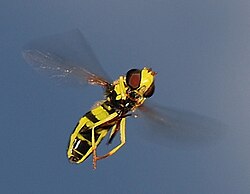
When I lived in New York, I (like many New Yorkers) had a brief roach problem. The roaches would appear one at a time every couple days, and I often chased them around and squashed them. I hate roaches, and still do. Regardless, I felt unsettled by my treatment of them—that my response to seeing these revolting creatures was to violently end their lives, an act which produced in me a cruel joy. I tried to come up with other solutions. If I was in a more compassionate mood, I would capture them in a cup and toss them outside. I found that a few drops of tea tree oil around where they entered my apartment was an effective non-lethal repellent and attempted to tape over the hole I thought they entered from. Still, throughout this several-month period, my commitment to insect welfare was inconsistent, and I personally killed a lot of roaches. This moral conundrum ended when an exterminator came and stopped the roach problem for good.
Only in the most strained utilitarian interpretation of events were there “welfare tradeoffs” here. This wasn’t exactly a dilemma in which I had to sacrifice something for the good of insects. What mattered instead was whether I could find a practical permanent non-violent solution to the roach problem (I couldn’t) and whether I had the moral courage to get rid of them without killing them in the meantime.
Furthermore, there was a moral hypocrisy to my failed non-violent approach. Obviously, the roaches and I could not cohabitate. But I delayed calling an exterminator out of a kind of denial of this fact, wishing that the problem would just go away on its own without explicit death having to be involved, meanwhile at times personally killing roaches, as if killing them occasionally and out of passion was somehow better than systematically and all at once. The tea tree oil was effective and non-violent, but it was necessarily only a temporary solution, and I applied it inconsistently. My downstairs neighbor was the one who called the exterminator, and one day, my roach problem was gone, without my complicity.
This obviously may sound somewhat insane (remember, I am merely a centrist on the issue of insect welfare here), but it expresses what moral action looks like in practice. I do and did value insect welfare, but the way I tried to express that concern was irrational and inconsistent. In theory, I really wanted to deal with the problem non-violently, but in practice, I killed roaches, while also, out of a kind of cowardice, failing to pursue the course of action that would have probably minimized insect death (earlier extermination). In other words, I faced a proper moral tradeoff: not between my well-being and the roaches’ (obviously, I take precedence here), but between different courses of action whose outcome was uncertain. Unlike in the clean hypothetical world of moral calculation, this is what ethics looks like in practice even among people who share moral commitments: sloppy, imperfect, irrational, in other words, all too human.
Obviously, my roach situation wasn’t really that important. Rightfully, no one would fault me for killing a few roaches. But it was still a little important, because I agree with Adelstein that insects matter at least a little bit, and that they are worthy of our concern and care. Adelstein is probably one of the rare people sympathetic to my attempts at insect compassion. That, to me, is the failure of his piece: that the actually interesting and challenging radical call to compassion towards insects (and the difficult question of how we should messily apply it in the real world) is hidden by the logic of objective quantification.
Peter Singer imagines a thought experiment wherein on your way to work, you encounter a drowning child, but have to ruin a new suit in order to save them: obviously, you say that you would. It is also something that will never happen to you. In Jeff Sebo’s The Ant You Can Save, he riffs on this thought experiment, imagining whether we would expend a small amount of energy to save an ant drowning in water. Unlike Peter Singer’s original hypothetical, this is something that has happened and will happen to you. How will you act? While I was working on my recent piece on Sebo’s work, in a moment of synchronicity, I saw my (vegetarian) friend do exactly what was being imagined in Sebo’s introduction: witness a bug struggling in a glass of water and gently letting it out.
1 Matthew, if you’re reading this, I maintain my debate challenge, and I will have you know, I placed top four in two regional Lincoln-Douglas debate tournaments during my junior year of high school. ↩